Measurements at the Mauna Loa Observatory stopped after the 2022 eruption of the Mauna Loa volcano, when lava flow crossed the access road and took out power lines to the facility. The observatory remains inaccessible by vehicle and without power from the local utility company.
Observatory staff has established limited solar power in four observatory buildings and restored approximately 33 percent of the measurements onsite, including the Global Monitoring Laboratory and Scripps critical CO2 records and other atmospheric measurements.
Media can contact: Theo Stein (303) 819-7409 (theo.stein@noaa.gov) or Karin Vergoth 303-632-6413 (karin.vergoth@noaa.gov)


We are measuring nitric acid vapor and particles that contain nitrate, sulfate, chloride, ammonium, oxalate, methanesulfonate, calcium, sodium, potassium, and magnesium, which we call “aerosol ions.” We express the results in terms of the mass of each substance per cubic meter of air, µg/m 3. Sometimes we express the concentrations as moles of substance per 1,000,000,000,000 moles of air, “parts per trillion by volume ” (pptv).
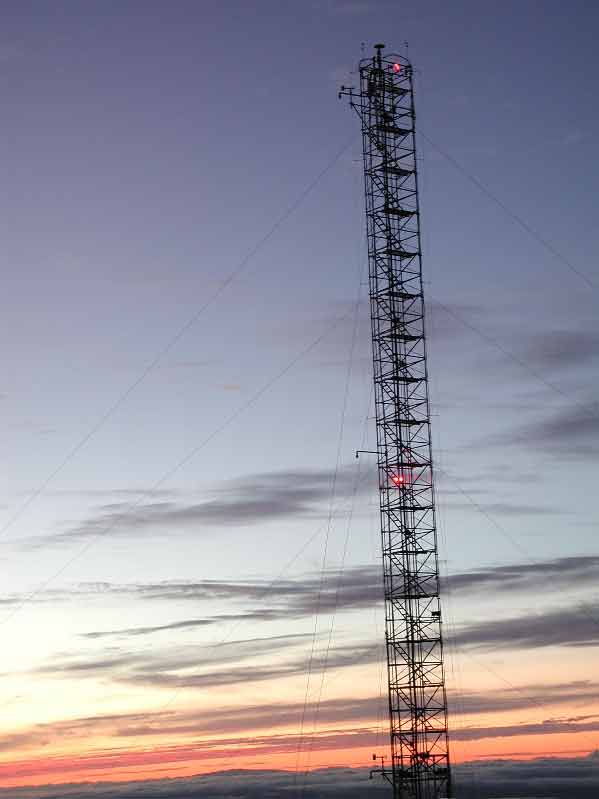
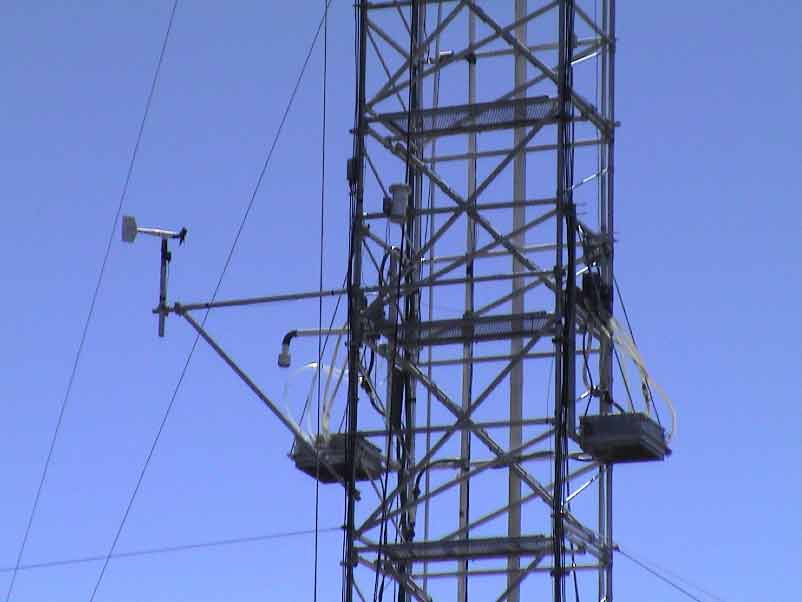
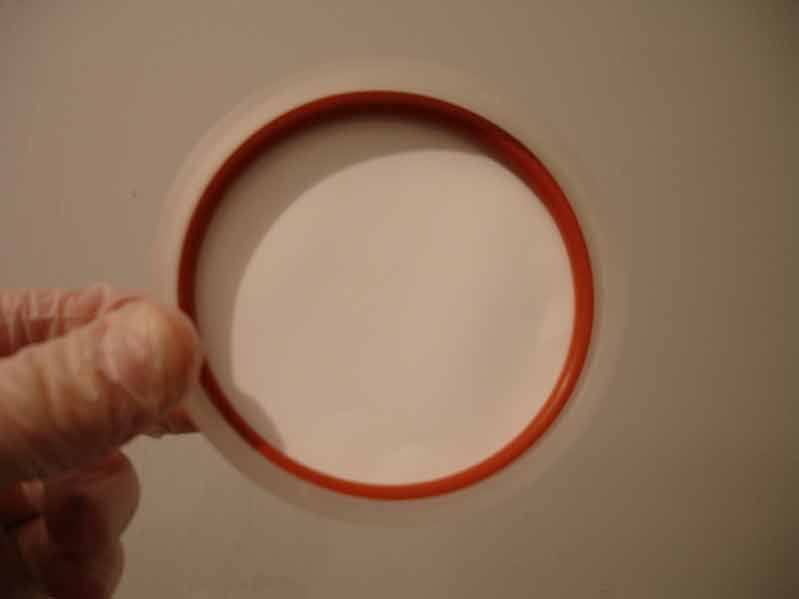
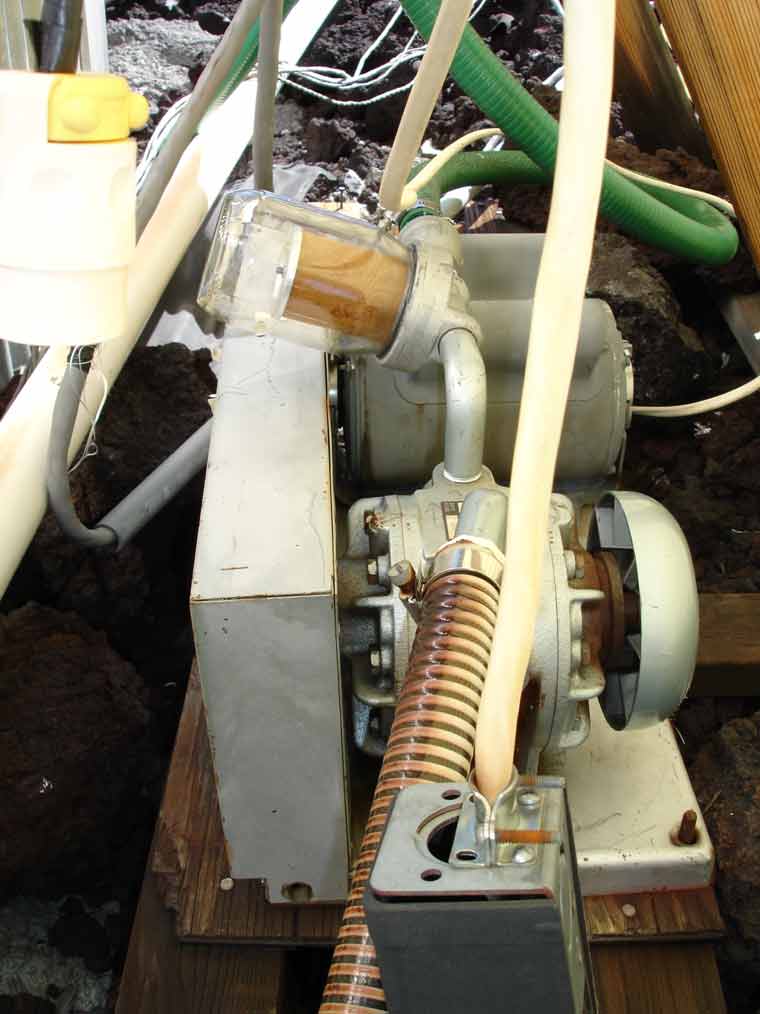
We pull air through a Teflon filter every night. Filters for each day of the week are exposed to an ambient air stream at the 7m level of a 40m MLO tower. We sample from 8 PM to 8 AM every night to provide the maximum probable exposure to the MLO down slope wind regime. Once a week the filters are sent back to our UH laboratory, where the ions are extracted and analyzed using a technique called "ion chromatography." Nitric acid is collected by a nylon filter and analyzed in the same way at UH.
These substances have important effects on climate and atmospheric photochemical reactions. We are trying to assess the impact of continental sources on the air of the mid-Pacific, and to define day-to-day and longer term variations (e.g., seasonal) in background atmospheric nitric acid vapor concentrations.
Atmospheric particles affect the amount of sunlight that reaches the Earth, by reflecting (scattering) some of the incoming sunlight back to space. Thus, they often have a cooling effect on climate. Nitric acid and nitrates are a product of both natural sources (lightning) and man-made ones (vehicle exhaust). Sulfates also have natural sources (the ocean and volcanoes) in addition to a large source from coal burning for electric generation. We can sometimes identify the natural and man-made amounts by seeing how much concentrations increase when the air is coming from populated continental regions. However, there are very few measurements of these ions in the Free Troposphere (FT, from about 1 km to 15 km altitude) that can be used to see whether numerical climate models are accurately simulating the impact of OC and EC. Our long-term FT measurements at MLO are being used to test those models and make them more accurate.
We have seen large year-to-year differences, apparently related to rainout between the source regions and MLO regions in wetter vs. drier years. We have not seen a continual upward or downward trend, though.One of the most interesting trends is the annual variability of these ions.
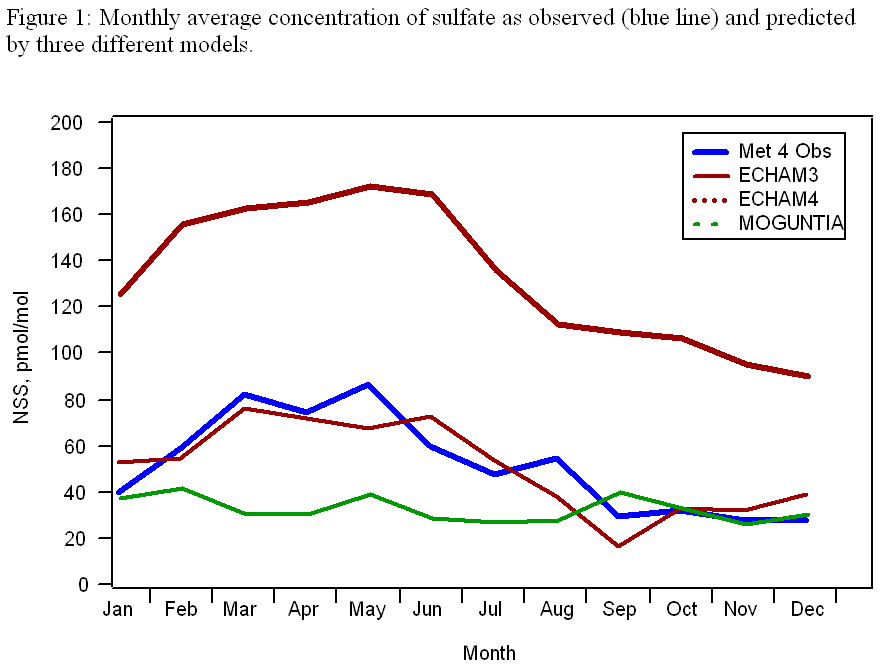
Figure 1 (below) shows sulfate monthly average observations with three model predictions. The big spring peaks are due to transport from Asia, while the late summer nitrate peak is from North America.
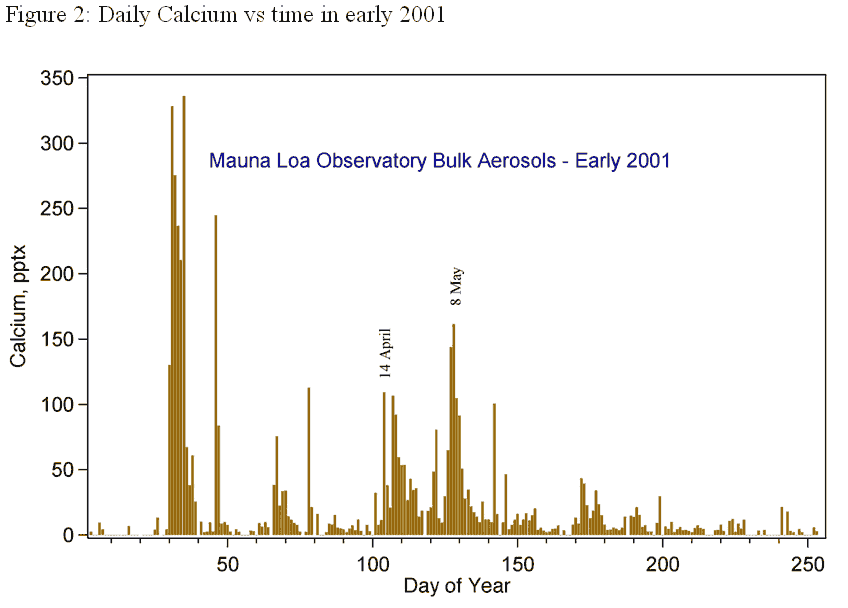
In Figure 2 (below), the daily samples show that Asian dust storms can cause high-concentration events when their calcium-rich particles reach MLO. However, we have not seen long-term trends in any of the ions, in part because the variability from year to year is so great that it masks them.
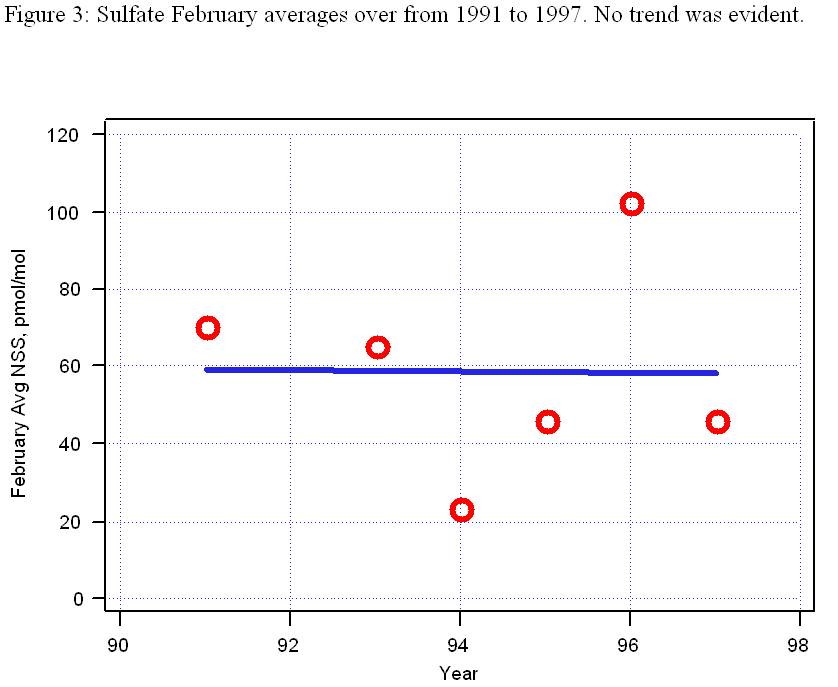
We know from other sources that sulfur emissions from Chinese coal burning are decreasing, even though we could not see a decrease in springtime sulfate at MLO in the 1990s.
See Figure 3 (below).
Models of climate change must be tested against measurements. One of the largest issues in climate forcing is the role of aerosol particles that scatter sunlight back to space. Our measurements provide one of the few tests of these models’ ability to describe free tropospheric aerosol concentrations. Aerosols in the FT are among the many things that impact the energy balance of the Earth. This project is quantifying one of those impacts so that overall climate models can be made more accurate.
Long-term records of aerosol concentrations are very important assets for testing models. MLO is one of the few places in the world where the mid (free) troposphere can be sampled, so our data set is unique.This work complements our organic aerosol measurements, which have been underway for only a few months. Until recently it was believed that sulfuric acid and sulfate salts were almost the only FT aerosols other than occasional dust from Asia. By measuring both OC and sulfates, we can get a more complete picture of the climatic importance of these particles.
Prof. Barry Huebert (UH)
808-956-6896
John Zhuang
808-956-6091
Trevor Kaplan
808-933-6965 (x226)
Paul Fukumura
808-933-6965 (x223)
http://www.soest.hawaii.edu/oceanography/faculty/huebert.html
1985
UHM Corrosion
UHM Organic Carbon
Air Quality Control