Measurements at the Mauna Loa Observatory stopped after the 2022 eruption of the Mauna Loa volcano, when lava flow crossed the access road and took out power lines to the facility. The observatory remains inaccessible by vehicle and without power from the local utility company.
Observatory staff has established limited solar power in four observatory buildings and restored approximately 33 percent of the measurements onsite, including the Global Monitoring Laboratory and Scripps critical CO2 records and other atmospheric measurements.
Media can contact: Theo Stein (303) 819-7409 (theo.stein@noaa.gov) or Karin Vergoth 303-632-6413 (karin.vergoth@noaa.gov)
 University of Hawaii at Manoa College of Engineering, U.S. Army TACOM
The program measures corrosion of advanced materials in Hawaii's extreme microclimates.
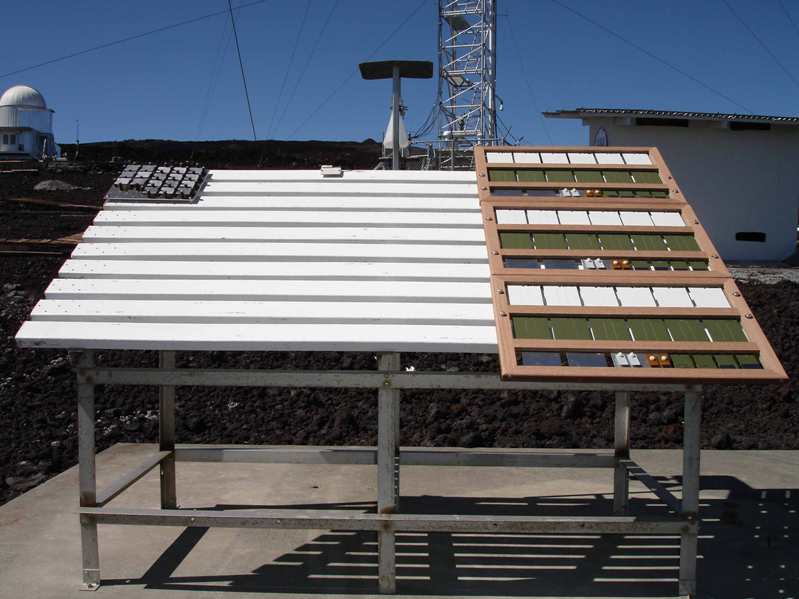
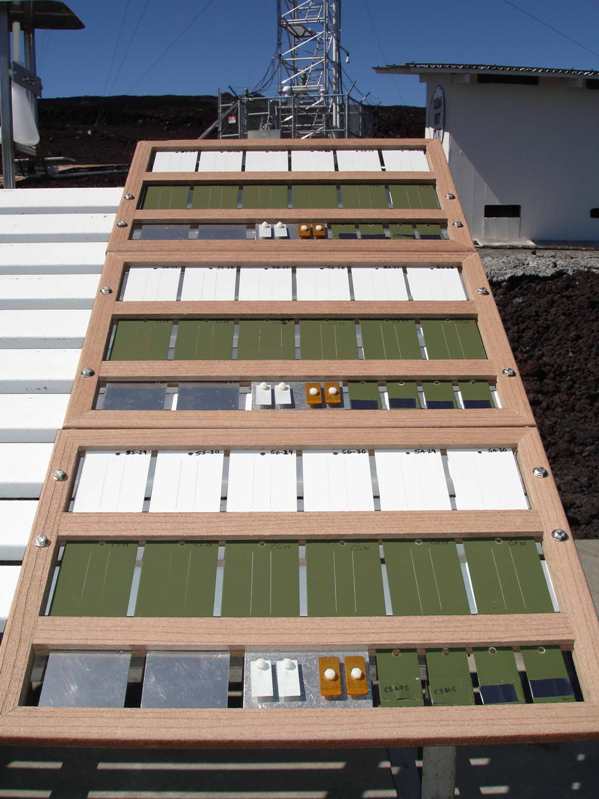
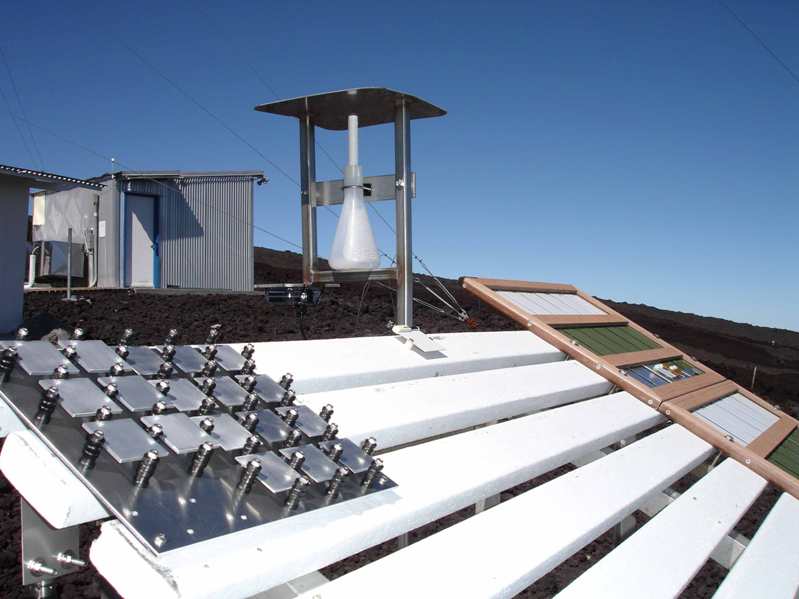
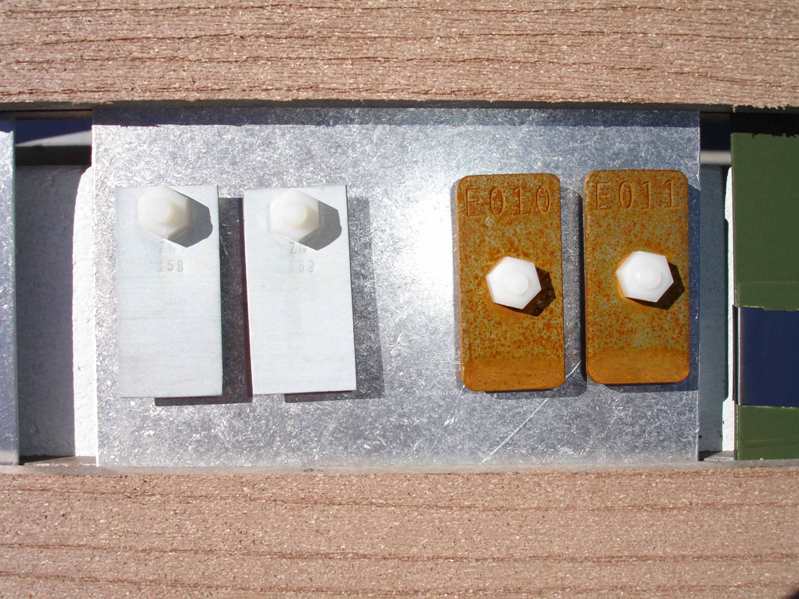
Two stainless steel corrosion test racks at the high-altitude observatory are mounted with metals (including aluminum, steel, and titanium), and composites (including aluminum matrix and epoxy matrix compostes) that are exposed to corrosion and monitor the weather and atmospheric data (for example, chloride and sulfur content).
The corrosion behavior these advanced materials and coatings are of interest to the Army. The racks are monitored remotely from Oahu. The high-altitude environment will be one of several others (e.g., marine, volcanic, rain forest, industrial, etc.) that are being setup for corrosion testing.
The State of Hawaii is an ideal location for conducting atmospheric corrosion research. Hawaii has one of the most spatially diverse climates on Earth due to the topography and wind patterns of the islands. The corrosion data from a wide variety of micro-environments will enable materials to be comprehensively characterized. The data will be used to determine if similarities exist with corrosion behavior in the other Pacific Rim (Alaska, Japan, Korea, US Pacific Coast, etc.) locations. The data will also be compared to laboratory tests and used to develop and improve accelerated corrosion tests in the laboratory.
This is a new program.
The High-Altitude Environment Corrosion Project is a part of the Pacific Rim Corrosion Research Program (PRCRP), which involves corrosion and climatology research in Hawaii and regions of the Pacific Theater of Operation. Hawaii has a unique spatially diverse climate, representing that of a miniature continent, making outdoor testing in a multitude of microclimates viable and practical.
Climate maps and corrosivity maps will be developed for the Hawaiian Islands. In addition, corrosion studies of advanced composites, ceramics, ceramic coatings and advanced electronics are being conducted.
The high-altitude environment will provide corrosion and degradation data for advanced materials including polymer-matrix composites and various coatings. The extreme of temperature and radiation levels will provide important corrosion and degradation data not obtainable at low-altitude locations. The high-altitude environment could also be used to screen material for use in other Pacifi Rim environments. The data obtained at Mauna Loa will be used to develop accelerated laboratory corrosion testing for high-altitude environments.
Lloyd H. Hihara
808-956-2365
George Hawthorn
808-956-5554
Darryl Kuniyuki
808-933-6965 (x236)
Trevor Kaplan
808-933-6965 (x226)
May, 2006
UHM Nitric Acid
UHM Organic Carbon