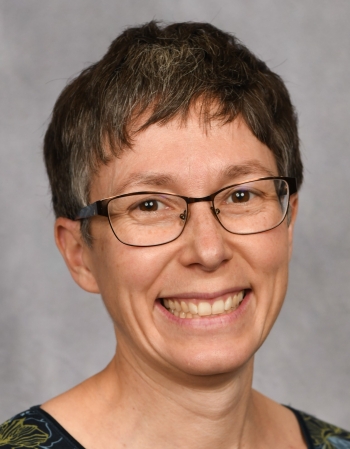
Rebecca Washenfelder
Research Chemist, separated
Tropospheric Chemistry
www.rebeccawashenfelder.com
Rebecca.Washenfelder@gmail.com
Affiliation
NOAA
I am an atmospheric scientist in Boulder, Colorado with interests in aerosol optical properties, trace gas measurements, and instrument development. I earned my PhD from Caltech, where I designed and constructed the first observatory in the Total Carbon Column Observing Network to measure CO2, CH4, N2O, CO, and H2O.
I began working at the NOAA Chemical Sciences Laboratory as a National Academies Postdoctoral Fellow in 2006, and continued as a staff scientist with the University of Colorado CIRES and NOAA. I developed and deployed custom spectroscopic instruments to measure gas concentrations and aerosol properties from ground sites and aircraft. In 2011, I received a Presidential Early Career Award for Scientists and Engineers (PECASE). I left the NOAA Chemical Sciences Laboratory in 2022.
I have co-authored 65 peer-reviewed publications, with a focus on the chemistry of reactive trace gases, optical properties of absorbing aerosol, and new instrument development. I currently serve as the Executive Editor of Atmopsheric Measurement Techniques.
Education
B.A., Chemistry, Pomona College, 1999
M.S., Environmental Science and Engineering, California Institute of Technology, 2002
Ph.D., Environmental Science and Engineering, California Institute of Technology, 2006

last modified: September 30, 2022